
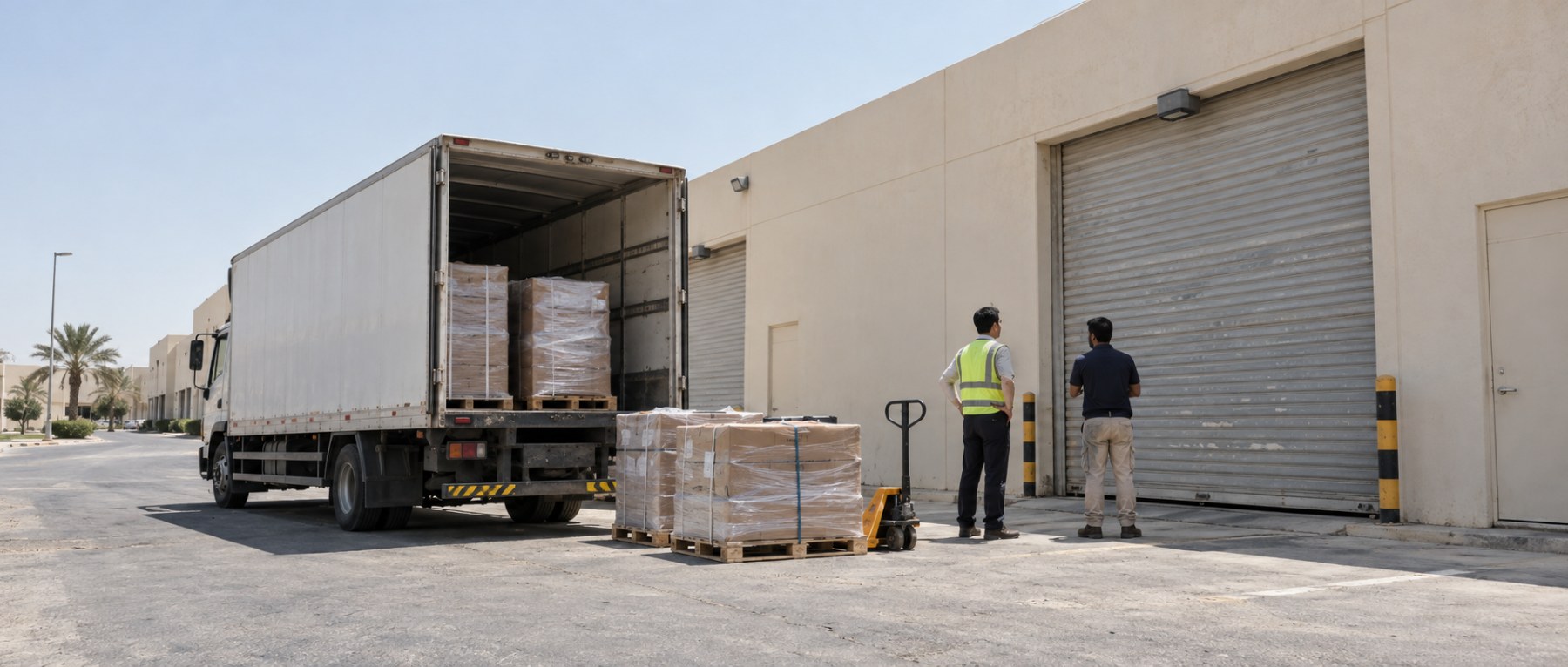
When your business leases an office, warehouse or factory in the UAE, signing the lease, receiving the keys and starting to pay rent address three separate matters: the contract, access to the premises and payment. Whether operations can begin still depends on whether the intended activity may be conducted at that address, whether the property permits the proposed use, whether the site meets operational requirements, and whether fit-out works, utilities and necessary confirmations can be completed on time.
Work backwards from the planned operational start date before signing. Every condition that could prevent staff from moving in, goods from entering a warehouse or equipment from entering production should have a responsible party, evidence of completion, a target date and agreed treatment of delay. Otherwise, rent, construction, equipment and staffing costs can begin accumulating while the premises remain unusable.
What Do the Five Key Dates Determine?
A premises lease requires separate consideration of at least five key dates or milestones:
- Signing date: when the parties complete execution of the lease.
- Effective date: when the lease takes contractual effect as agreed.
- Handover date: when the landlord delivers the premises in the agreed condition.
- Rent commencement date: when rent begins to accrue.
- Operational start date: when the premises meet the conditions required for the intended business activity.
These five milestones may fall close together, but they should not be assumed to coincide. Each obligation trigger should also be marked separately: when the deposit is due, when the landlord must complete its works, when the tenant may begin fit-out, when property management must provide support, and when the rent-free period and other charges begin. The lease and applicable law determine when a particular obligation is triggered; signing or receiving the keys alone does not settle that question.
Putting these milestones on one timeline exposes the cost of waiting. Between handover and rent commencement, establish when any rent-free or fit-out period begins and which charges it covers. Between rent commencement and operational launch, account for rent, property-related charges, contractor downtime, idle equipment, staffing commitments and pressure on customer delivery.
“Expected to be completed soon” does not allocate risk. Rent commencing on a fixed date, after agreed handover or once specified conditions have been satisfied places the waiting cost on different parties.
Does Completing Dubai Tenancy Registration Mean Operations Can Start?

A property being available for lease only completes the commercial screening. Your business must still align its intended activity, the permitted-use clause, the tenant entity, the address wording, the property’s permitted scope of use, and the registration and approval arrangements that apply in the relevant location.
In Dubai, Ejari is the system used to register tenancy contracts. Dubai Land Department provides the Ejari registration service and identifies the available service channels. (Source: Dubai Land Department Ejari registration service, October 2026)
Ejari registration does not approve the business activity, fit-out plan, fire-safety conditions, equipment installation, energy capacity or any other operational matter. It cannot establish that a warehouse may store a particular category of goods or that a factory’s existing electricity supply can support the proposed machinery. Treating Ejari as proof that premises are ready for business leaves the conditions most likely to affect the start date unchecked.
Dubai Land Department’s Tenancy Guide explains Dubai’s tenancy relationship and registration framework. Published in September 2020, it is relevant to arrangements in Dubai and should not be used to present Ejari as a UAE-wide requirement. (Source: Dubai Land Department, Tenancy Guide, September 2020)
For a project in another emirate, confirm the applicable registration, permitted-use and access requirements with the local tenancy authority, licensing authority, relevant free zone or property manager. An agent’s or landlord’s verbal response may help move discussions forward, but it is not enough to fix the operational start date. Matters affecting permitted use, access or facility conditions should be confirmed in writing by a party authorised to do so. All regulatory and approval requirements discussed here are subject to the latest official publication.
Licence renewal, lease renewal, tax filings and any applicable annual audit should also be planned alongside the lease term. The premises are the operating location; continued operation still depends on the requirements attached to the business entity, licence and activity.
What Does Receiving the Keys Prove?

Receiving the keys proves, at most, that the tenant has gained access to the premises. Whether contractual handover is complete still depends on the handover schedule, the condition of the site and the acceptance standard agreed by the parties.
An “as-is” lease needs an attachment recording the property’s condition, existing defects and the boundary between landlord and tenant works. A handover schedule, site photographs, test records, facility-capacity documents, a defect list and written confirmation of remedial work each prove different matters. Photographs can record visible conditions such as walls and floors, but they cannot by themselves establish that electrical capacity, equipment foundations or fire-safety conditions are suitable for the intended use.
For an office, check the conditions for staff occupancy, fit-out rights, building-management requirements and the cooperation required from property management. For a warehouse, check the goods permitted for storage, loading and vehicle access, fire safety, temperature control and any special storage requirements. For a factory, also establish whether the production activity matches the permitted use and whether equipment foundations, energy capacity, emissions, safety conditions and responsibility for alterations are defined.
For factories and other high-load premises, confirm the available electricity capacity before signing, whether an increase is required, who must apply and pay for it, and whether the proposed arrangements fit the production schedule. An existing electricity account shows only that the premises have a supply record; it does not establish that new machinery can operate as planned.
When Does a Rent-Free Period Cover the Preparation Period?
The value of a rent-free period depends on its commencement point, the charges it covers, its trigger conditions and the consequences of delay. The number of months alone does not show how much waiting cost your business will bear.
Landlord remedial works, property access, tenant fit-out, equipment delivery, utility readiness and external confirmations may all sit on the same path to launch. If any one of them moves, the operational start date moves with it. A lease cannot guarantee a third party’s decision, but it can define the actions within the landlord’s and tenant’s control: who submits documents, who provides cooperation, when each action is due, what evidence establishes completion, how delay is notified, and how rent commencement and exit arrangements will be adjusted.
Rent commencement, handover standards, responsibility allocation, delay consequences and exit arrangements should appear in the lease, a supplemental agreement or its schedules. Formal written records should be retained for confirmations from an authority, free zone, property manager or utility provider. Emails can form part of the communications and evidence; whether an email is sufficient to change the lease arrangements depends on its contents, the lease terms and applicable law.
The validity and enforceability of specific provisions should be reviewed against the actual lease by a suitably qualified local legal professional. The commercial negotiation should first allocate cost and responsibility; legal review should then confirm that the intended arrangements have been documented as expected.
Which Issues Must Be Resolved Before Signing?
Start by identifying every condition whose absence would prevent staff from working, goods from entering the warehouse or equipment from entering production. Then map the dependencies between them. Property access may be required before contractors can enter. A utility-capacity increase may affect equipment installation. The tenant entity or address wording may affect a later registration. If a prerequisite remains unresolved, a dependent start date should not be treated as a firm commitment.
Every operational condition should answer five questions: Does it apply? Who is responsible? What proves completion? What is the latest completion date? What happens if that date is missed?
By the signing stage, the decision will generally fall into one of three positions: the conditions have reliable support and the remaining risk is acceptable; the property remains viable, but rent commencement, handover standards or delay responsibility must be revised first; or the permitted use, facility capacity or necessary cooperation still lacks a reliable answer, so signing should pause.
Our approach is direct: do not defer a risk that could prevent operations and cannot be controlled through written evidence or contractual arrangements until after the deposit and rent have been paid.
Before signing, review the draft lease, supplemental agreements, handover schedules, property documents, external written confirmations and the internal launch plan on the same timeline. To assess whether the proposed arrangements address permitted use, handover, rent commencement and delay, Schedule a 30-minute complimentary assessment.
Rent may begin to accrue on the date agreed in the contract. Operations can begin only after the necessary conditions have been satisfied. Allocating that period and its cost before signing is the starting point for controlling premises risk.
Last updated: October 2026. This content is for informational purposes only and does not constitute legal or tax advice. For professional consultation, please contact the MIRISE team.