
02 | UAE–EAEU Economic Partnership Agreement takes effect
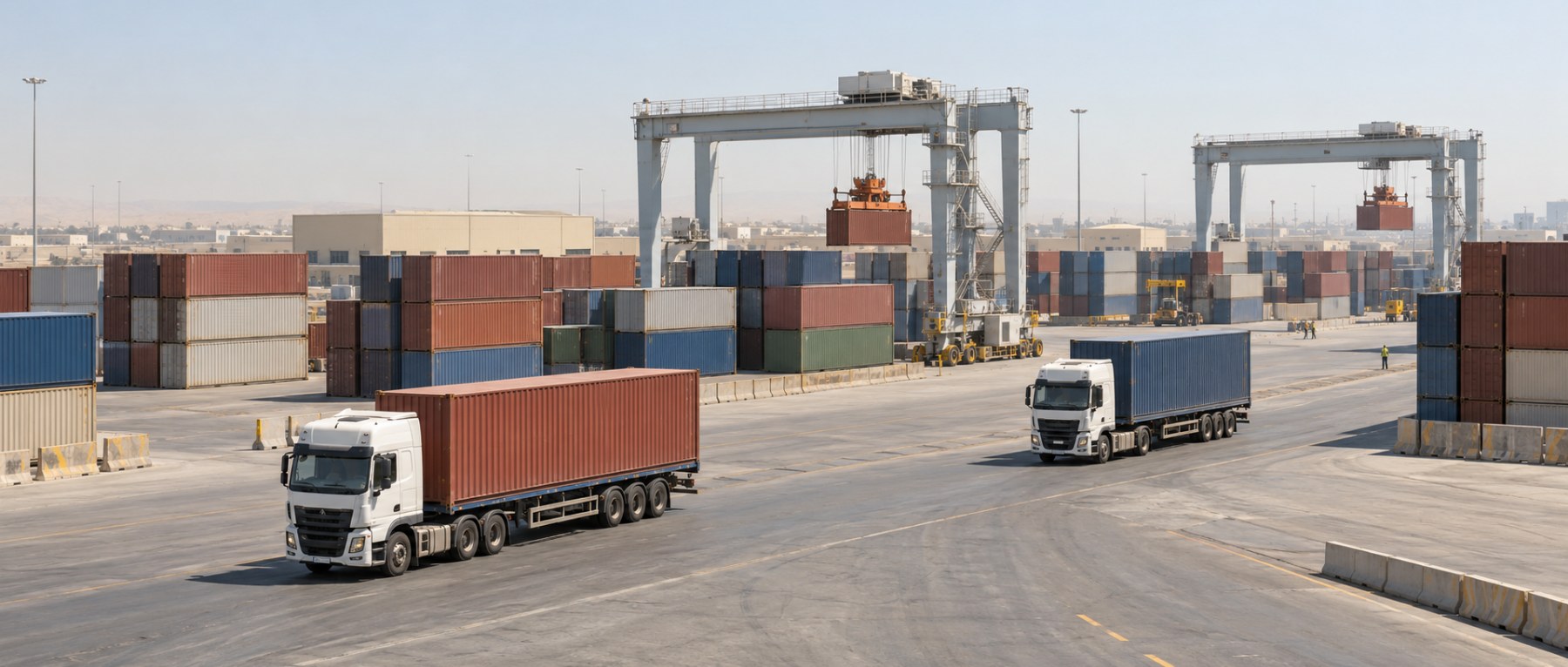
Businesses trading goods between the UAE and the Eurasian Economic Union (EAEU) should immediately recheck tariff classifications, preferential origin requirements and customs documentation, as their existing assumptions about duties and delivery costs may need to change. As of 2026-10-07, the Economic Partnership Agreement between the UAE and the EAEU is in force, covering trade with Armenia, Belarus, Kazakhstan, Kyrgyzstan and Russia.
The agreement grants preferential access across more than 86% of tariff lines, covering about 96% of the value of goods currently traded between the two sides. It reduces or eliminates customs duties, streamlines trade procedures and introduces rules for customs cooperation, e-commerce, economic cooperation and the participation of small and medium-sized enterprises in international trade. Annual trade between the two markets is expected to approach $50 billion by 2032.
UAE–EAEU non-oil trade reached $33.6 billion in 2025, up 16% from $29 billion in 2024 and more than four times its 2021 value. It rose by a further 6.2% year on year to $14.3 billion in the first half of 2026. The agreement creates a new preferential framework; it does not give every product the same tariff automatically. Each business still needs to verify its tariff classification, origin requirements and documentary arrangements item by item.
Source: Gulf News, 2026-10-06
04 | UAE targets a 25-fold increase in international digital connectivity by 2030
The UAE is bringing forward the international data connectivity needed for its artificial intelligence sector, with an expansion far beyond an incremental infrastructure upgrade. e& has launched a strategic project to increase international connectivity capacity from the current 20 terabits per second to more than 500 terabits per second by 2030, around 25 times the present level.
The project will also develop diverse connectivity routes to improve efficiency, reliability and latency. It is intended to support AI clusters in the UAE, global cloud service providers and e& operations across its markets. e& operates in 38 countries and serves more than 250 million subscribers, so the expansion will also strengthen the link between the UAE’s infrastructure and global digital networks.
For businesses assessing data centre, cloud or AI operations in the Middle East, the capacity target is only the first consideration. Route redundancy, cross-border data-flow arrangements and actual latency performance will determine whether the planned capacity can support stable operations.
Source: Gulf News, 2026-10-06
05 | Saudi East–West pipeline returns to more than 80% of design capacity
Restored pipeline capacity does not mean route risk has disappeared, so businesses should continue assessing whether crude flows can switch reliably among the pipeline, Red Sea ports and maritime routes. Saudi Arabia’s East–West pipeline has returned to more than 80% of its design capacity after repairs following an attack. The line can carry 7 million barrels per day and is currently transporting about 6 million barrels per day; after supplying Red Sea refineries, around 4.5 million barrels per day remain available for international shipment.
The approximately 1,200-kilometre pipeline runs from Abqaiq to Yanbu and is Saudi Arabia’s main strategic route around the Strait of Hormuz. Operations stopped after facilities were attacked on September 10 and resumed at reduced rates on September 22. Within days, throughput exceeded the pre-attack level of 5.5 million barrels per day. Loadings from Yanbu have averaged more than 4 million barrels per day since June, compared with about 973,000 barrels per day over the same period last year.
The recovery has eased short-term transport pressure. Saudi crude exports reached 6 million barrels per day in September, an 80% increase from August; supply stability now depends more heavily on the ability to keep switching among the pipeline, Red Sea ports and maritime transport.
Source: Pipeline Technology Journal, 2026-10-06
06 | Egypt sets out the main pillars of its 2027–2030 FDI strategy
Businesses considering projects in Egypt should reassess their policy fit against industrial localisation, technology transfer, local production and export capacity. These priorities sit at the centre of Egypt’s 2027–2030 foreign direct investment strategy and are likely to affect whether a project aligns with the country’s investment promotion framework.
The strategy will assess Egypt’s investment environment and global investment trends, identify priority sectors for investment promotion, and set targets for increasing private-sector investment and FDI inflows through 2030. The government also plans to identify and promote opportunities more selectively, implement proposed reforms and fully digitise investor services to reduce the time and effort required to complete procedures.
The strategy was developed through consultations with government institutions, industry federations, professional associations, business organisations, investment companies and private-sector representatives. Experts from the World Bank and the International Finance Corporation in Egypt also contributed. The announced material covers the strategy’s main pillars; sector-specific measures and implementation conditions will depend on subsequent policy documents.
Source: Daily News Egypt, 2026-10-05
Other updates
- 08 | World Bank forecasts a 2.1% contraction in the Middle East economy in 2026: The World Bank has downgraded its 2026 forecast for the Middle East to a 2.1% contraction; GCC economies are projected to contract by an average of 4.3%, while Qatar is forecast to contract by 20.9%. (Source: The National, 2026-10-06)
- 09 | Dubai tightens petroleum products trading oversight after safety violations: After inspections found diesel being stored and traded at unlicensed facilities, the Dubai Supreme Council of Energy called for safety and compliance standards across storage, transport, distribution and supply. (Source: Gulf News, 2026-10-05)
- 11 | Saudi Arabia requires identity checks for large gold transactions: The Ministry of Commerce requires precious-metals and gemstone traders to identify and verify customers when a single cash transaction, or multiple apparently related transactions, reaches SAR 50,000, and to retain information and records under anti-money-laundering requirements. (Source: Saudi Gazette, 2026-10-06)
- 12 | Iraq launches its first electronic tax assessment system for large taxpayers: The General Commission for Taxes has introduced a system that supports remote assessment and payment, electronic document archiving, and review of tax returns by audit and compliance teams. (Source: Iraq Business News, 2026-10-06)
- 13 | ADGM regulator sets out its reform agenda through 2027: The Financial Services Regulatory Authority has outlined its 2027 regulatory agenda and updated its reform priorities for funds, digital assets, decentralised finance and compliance; more than 410 financial institutions are authorised in ADGM and around 160 more are seeking to establish operations. (Source: Pinsent Masons, 2026-10-05)
- 14 | Türkiye’s annual inflation falls to 29.73% in September: The Turkish Statistical Institute reported annual consumer price inflation of 29.73%, the first reading below 30% in 57 months; the monthly increase was 1.84%, also below market expectations. (Source: Hürriyet Daily News)
- 17 | Egypt expands long-term financing tools for public and private projects: The government plans to expand innovative long-term financing tools, diversify funding sources and improve liquidity while continuing state-asset reforms and the government IPO programme to fund the expansion of national and private projects. (Source: Daily News Egypt, 2026-10-06)
- 18 | Türkiye considers new rules for foreign online accommodation platforms: The proposed bill would require foreign platforms to obtain a permit from the Ministry of Culture and Tourism, appoint a representative in Türkiye, verify and display accommodation providers’ licence details, and cap total fees and commissions at 17% of the sale price excluding VAT. (Source: Hürriyet Daily News)
- 20 | Middle East crude exports excluding Iran rise above pre-conflict levels: Kpler shipping data showed the weekly average briefly exceeding the pre-conflict level of 18 million barrels per day; around 40% of exports now bypass the Strait of Hormuz. (Source: Hürriyet Daily News)
- 21 | Egypt tightens disclosure rules for gold-linked investment insurance: The Financial Regulatory Authority requires insurers to explain clearly the insurance nature, benefits, risks, key terms and investment component of these products, prohibits misleading presentation as savings or investment products, and requires records showing that customers understand the product’s nature. (Source: Daily News Egypt, 2026-10-05)
- 22 | Iraq prepares to debate a 2027 budget with a $48.8 billion deficit: The federal budget draft projects total expenditure of around IQD 200 trillion and a fiscal deficit of IQD 64 trillion, equivalent to about $48.8 billion. (Source: Iraqi News, 2026-10-05)
- 23 | Qatari LNG cargoes continue through the Strait of Hormuz despite risk: Shipping data recorded four LNG carriers reappearing outside the strait on October 2–3, three of them linked to QatarEnergy, showing that the main energy route remains in operation. (Source: Doha News)
- 24 | Saudi Aramco advances a gas project worth more than $100 billion: Saudi Aramco is nearing a major contract award for the Jafurah gas project, which is valued at more than $100 billion and has estimated recoverable resources of 229 trillion cubic feet. (Source: Upstream, 2026-10-04)
- 25 | Türkiye plans to turn Iraq’s Development Road into a multi-fuel energy corridor: Türkiye intends to add oil, natural-gas and electricity transmission infrastructure along the route connecting Iraq’s southern ports with Europe, expanding the freight corridor into an energy route with an estimated annual value of $80 billion. (Source: Iraqi News, 2026-10-06)
- 27 | Iraq applies a rate of IQD 150,000 per $100 to certain housing projects: The federal arrangement allows investors in participating residential projects to obtain dollars at the Central Bank of Iraq’s official rate, with buyers using the same mechanism for instalment payments; it has not been implemented on the same basis in the Kurdistan Region. (Source: Kurdistan24, 2026-10-05)
- 30 | Egypt targets 10 million cubic metres of desalinated water per day: The government is working with ACWA Power on seawater desalination projects and aims to raise daily output capacity to 10 million cubic metres while localising related equipment, industries and technologies. (Source: Daily News Egypt, 2026-10-05)
Last updated: October 2026. This content is for informational purposes only and does not constitute legal or tax advice.